
What To Know
- Tasks that used to need a desktop computer, like recognizing complex data patterns or creating content in real time with AI help, now happen instantly and without any noise on a device that is less than half an inch thick.
- Supporting 1 billion colors and 500 nits of brightness, it ensures that every pixel of a 4K edit or a complex architectural simulation is rendered with sharp detail and rich contrast.
Apple’s M5-based MacBook Air marks an evolutionary step up in personal computing. The latest MacBook Air may look like an “entry-level” laptop to some, but it quietly hides professional innards fully capable of speeding ahead with some of the most demanding tasks, such as video editing, software development, and 3D rendering. Never one to be “loud,” Apple’s MacBook Air is once again an elegant and understated machine that is suitable for classrooms and boardrooms alike.
The Apple Silicon Maturity
The M5 chip, which has four performance “super cores” and six efficiency cores, is at the center of this change. It is a wonder of 10-core CPU architecture, which refers to a central processing unit (CPU) design that includes ten individual processing units for handling tasks. This enhancement enhancement isn’t just a small update; it’s a big change in how processing works. The M5 architecture has a dedicated neural accelerator built right into each GPU core. This chip is made for demanding AI tasks, such as real-time image processing, natural language understanding, and complex data analysis.
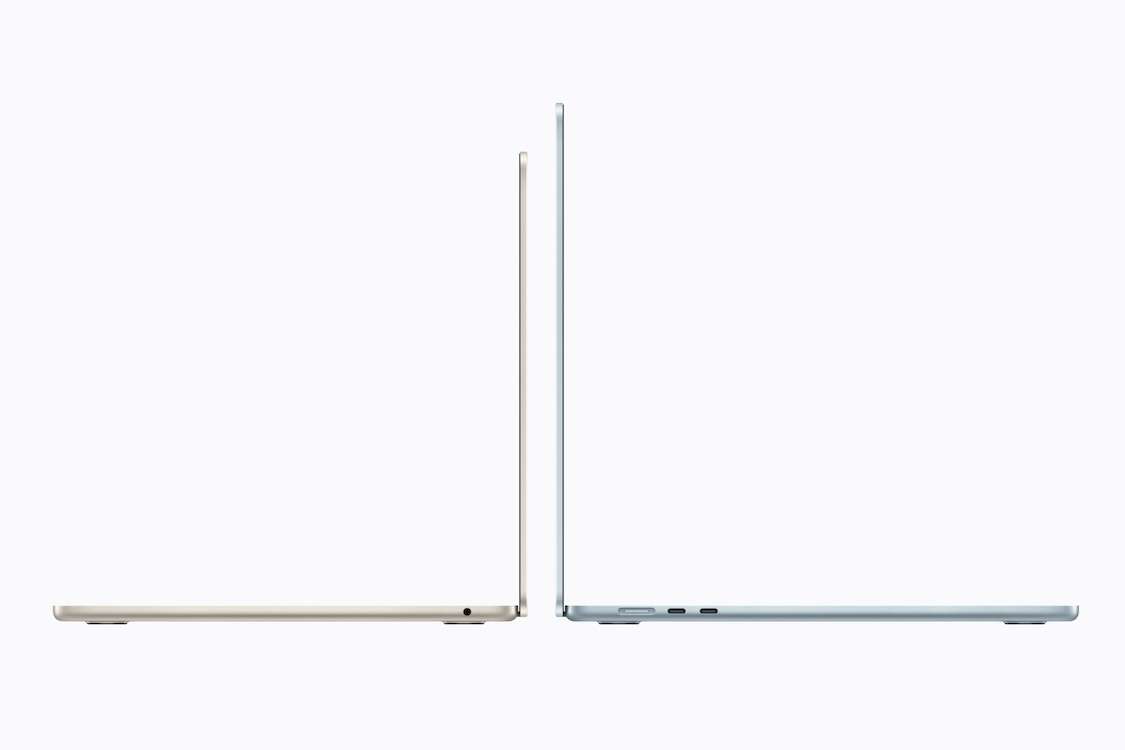
This capability means that the MacBook Air is no longer just for making spreadsheets and slide decks for the modern strategist or business owner. It is a fantastic platform for running local AI applications that use Large Language Models (LLMs). AI performance is up to 9.5 times faster than the original M1 model. Tasks that used to need a desktop computer, like recognizing complex data patterns or creating content in real time with AI help, now happen instantly and without any noise on a device that is less than half an inch thick.
Multitasking Without Sacrificing Quality
One of the most significant pivots in this generation is the move to 16 GB of unified memory as the standard configuration. In the business world, “standard” usually means a baseline that people quickly outgrow. In this case, 16 GB is a high limit for most workflows.
The M5 chip has unified memory (which is a bummer in my opinion), with a respectable 153 GB/s of bandwidth, which makes it much smoother than older systems. This memory architecture ensures that local LLMs (large language models), 4K video timelines, and a dozen open browser tabs can all stay open and responsive at the same time. The system doesn’t care if you’re using a spreadsheet to work with a complicated financial model or high-intensity web apps to run a global communications campaign. The 16 GB limit is what turns the MacBook Air from a secondary travel device into a main production engine.
From productivity to professional multimedia
The MacBook Air can be used for many different things, both creative and professional. It is still the best choice for everyday tasks—email is instant, web browsing is 50% faster than similar Intel-based offerings, and office productivity suites work with no lag. However, the high-end features are what really impress.
People who work in multimedia for the web and social media now have a silent, fanless computer that can edit 4K video of feature films and run complicated 3D simulations. The M5 MacBook Air can handle heavy graphics rendering and 3D environment simulations with a level of grace that was only available in the “Pro” lineup before. This capability is because it has hardware-accelerated ray tracing and a powerful media engine that supports ProRes and AV1 decode. It is a machine that works just as well for both hobbyists and professionals alike.
Converging design and engineering
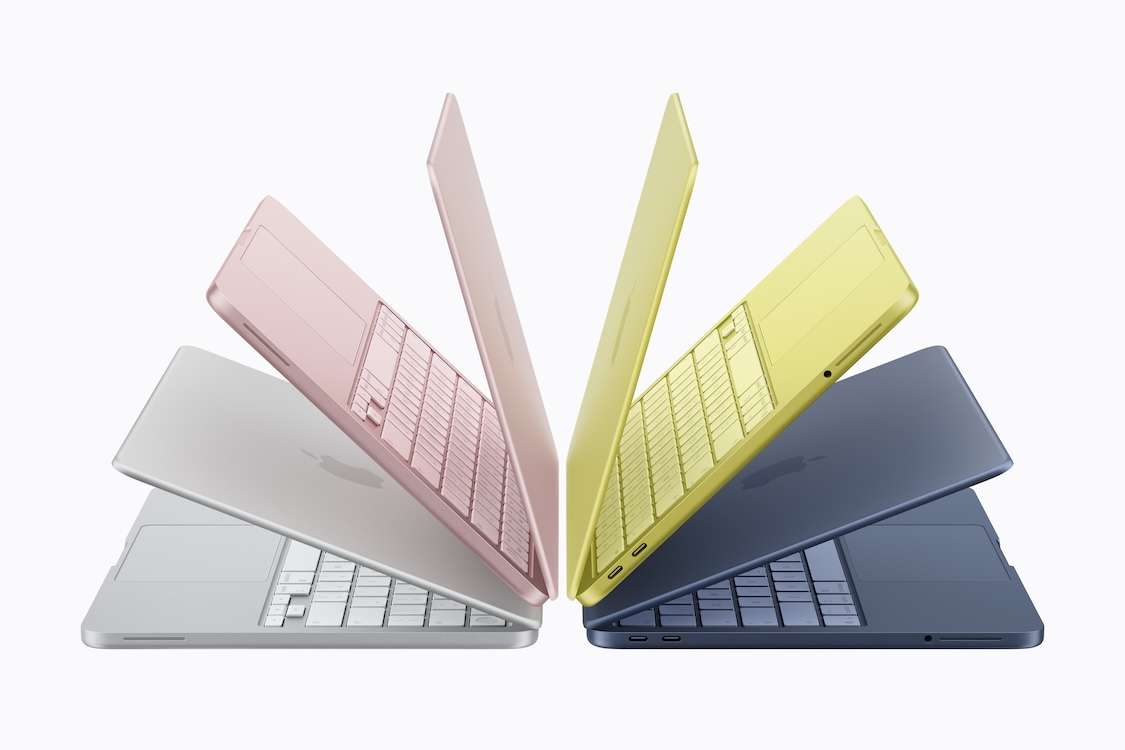
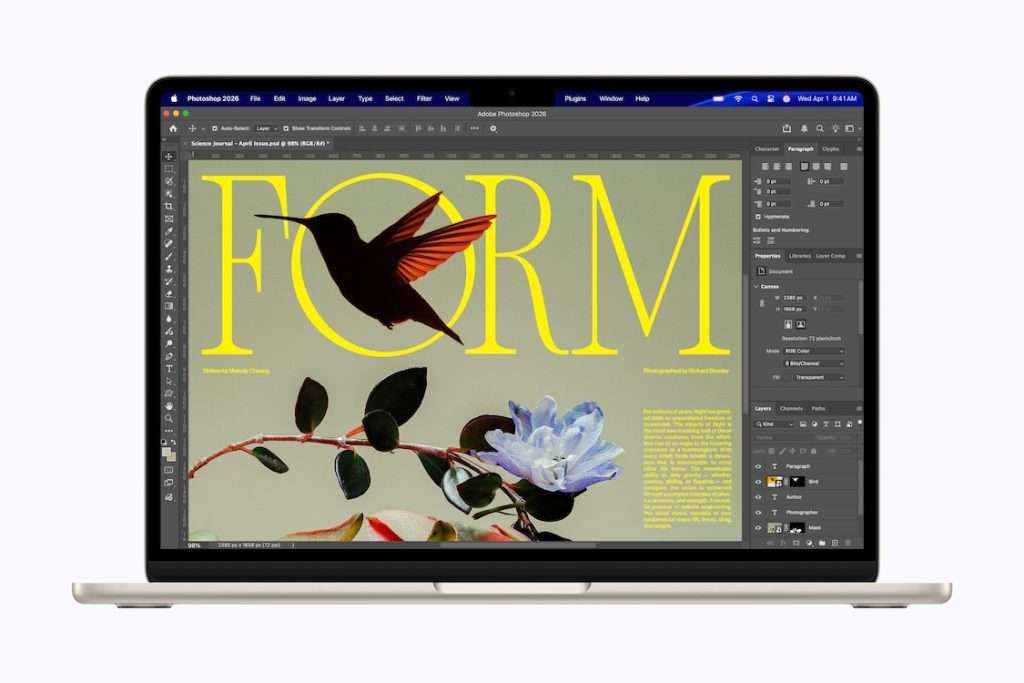
The immediately recognizable and long-lasting recycled aluminum enclosure is where this power comes to life. It now comes in a striking Sky Blue color, as well as Midnight, Starlight, and Silver. The 13.6-inch and 15.3-inch Liquid Retina displays are still the best for mobile visual fidelity, with “Liquid Retina” referring to Apple’s advanced display technology that offers high resolution and color accuracy. Supporting 1 billion colors and 500 nits of brightness, it ensures that every pixel of a 4K edit or a complex architectural simulation is rendered with sharp detail and rich contrast.
Apple’s attention to the “soft” side of technology is equally evident. The 12 MP Center Stage camera with Desk View makes sure that C-suite video calls are professional and engaging. The three-mic array and immersive Spatial Audio sound system make it feel like you’re in a studio when you’re recording or listening.
Connectivity for the Global Citizen
Portable machines often struggle with power, but the M5 MacBook Air is designed to withstand extended use. With up to 18 hours of battery life and fast-charging capabilities that reach 50 percent in just 30 minutes, it is designed to outlast international flights or long-drawn boardroom meetings.
Furthermore, the inclusion of Wi-Fi 7 and Bluetooth 6 ensures the device is future-proofed for the next generation of high-speed wireless standards. The two Thunderbolt 4 ports now support up to two external displays even when the laptop is open, a critical feature for those who require an expansive digital workspace to manage multi-layered projects or professional 3D workflows.
The Universal Workhorse
The M5 MacBook Air is a testament that power doesn’t require bulk. It is a machine that serves the student, the small business owner, and the C-suite with the same uncompromising efficiency. By standardizing high-performance specs like 16 GB of RAM and 512 GB of fast SSD storage and integrating cutting-edge AI acceleration, Apple has once again brought to market an attractive high-performance machine that is likely to equip users for tasks well into the 2030s.
###