


Abstract As conventional smartphones reach parity in raw processing power, eye strain and visual fatigue have emerged as major drawbacks of high-brightness glass panels. The TCL P80 Pro, developed by consumer electronics titan TCL Industries, introduces a distinct hybrid proposition: merging the fluid, vibrant responsiveness of a 1.5K AMOLED panel with the glare-free tactile comfort of NXTPAPER display tech via an instant physical toggle. This review examines TCL’s industrial evolution from cassette tape producer to display powerhouse, analyzes the crucial operational differences between electrophoretic E-Ink and active NXTPAPER panels, and evaluates whether the P80 Pro’s eye-friendly virtues can convince a power user to trade in a dedicated periscope telephoto camera like that of the aging Realme 12 Pro Plus.
Seeking a Meaningful Successor to My Aging Mid-Ranger
My trusty Realme 12 Pro Plus is beginning to show its age. While its dedicated periscope zoom lens still punches remarkably above its weight class, daily battery endurance and cumulative screen fatigue have prompted me to survey the current horizon for an upgrade. In an oversaturated market where every black rectangle feels iterative, very little sparks genuine curiosity. Most modern flagships push peak luminance numbers into thousands of nits without solving the fundamental discomfort of staring into a directional spotlight for ten hours a day. That search led directly to the TCL P80 Pro, a device that rejects conventional industry orthodoxy by pitching a functional hybrid bridge between a high-performance daily driver and a dedicated paper reader.
The Industrial Pedigree Behind the Glass
To understand the engineering priorities behind the P80 Pro, one must trace the institutional lineage of its maker. Headquartered in Huizhou, Guangdong, TCL began life in 1981 under the moniker TTK, manufacturing audio cassette tapes for domestic and regional markets. With agile reinvestment and manufacturing discipline, the company expanded into consumer televisions and telecommunications. In the early 2000s, TCL stunned the world with its aggressive global expansion, acquiring the television business of France’s Thomson and setting up a milestone joint venture with the mobile handset division of Alcatel.
As the conglomerate aged, it morphed into two separate commercial giants. TCL Technology became the owner of heavy capital-intensive industrial manufacturing. Pioneering cutting-edge semiconductor displays with its CSOT arm. Semiconductor and solar wafer materials. In contrast, TCL Industries took possession of end-user appliances, smart connected hardware, and mobile devices. The TCL P80 Pro is a flagship from TCL Industries, tapping into the group’s strong panel engineering heritage to establish its footprint in consumers’ pockets.
Dissecting the Display: Glass, E-Ink, and NXTPAPER
Grasping what makes the P80 Pro unusual requires deconstructing display physics across three distinct categories.
A standard modern smartphone screen relies on an emissive OLED or backlit LCD matrix covered with reflective protective glass. These panels deliver stellar contrast, ultra-fast refresh rates, and cinema-grade color reproduction, yet they inherently emit intense blue light and cause eye-straining specular glare in outdoor sunlight.
At the other end sits electronic ink, or E-Ink, familiar to avid users of dedicated e-readers. E-Ink operates on electrophoretic microcapsules suspended in fluid: tiny black and white pigments shift position under weak electrical charges to reflect ambient light just like real book paper. True E-Ink consumes negligible electricity once text is rendered, requiring power only when changing page states. Its physical drawbacks, however, are prohibitive for a modern mobile operating system: sluggish refresh rates, visible ghosting, and washed-out color gamuts make video playback, web scrolling, and mobile UI rendering frustratingly impractical.
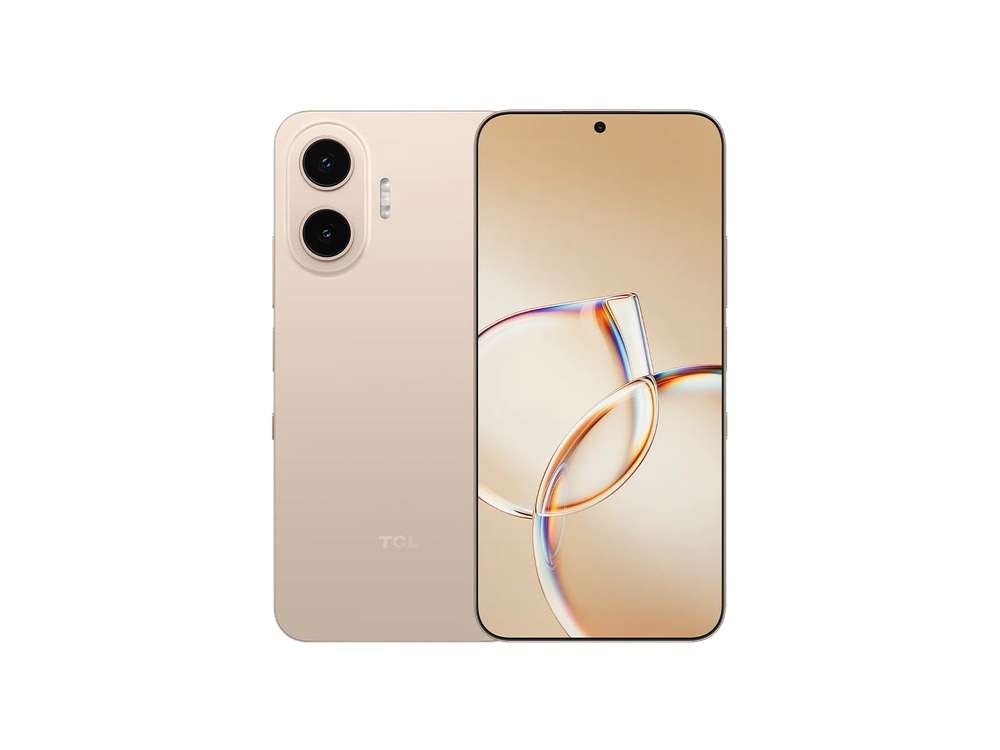
The TCL P80 Pro charts a pragmatic middle path with its proprietary NXTPAPER implementation, deployed here over a crisp 1.5K AMOLED panel boasting a 120Hz refresh rate and up to 3,200 nits peak brightness. TCL equips the chassis with a dedicated physical NXTPAPER key on the side frame. Flipping this switch instantly cycles the panel across color paper, e-paper reading, and full multimedia profiles. Nano-etched surface scattering eliminates harsh reflections and gives the screen a tactile, fingerprint-resistant satin feel. Crucially, NXTPAPER remains an active emissive display at heart; unlike static bi-stable electrophoretic E-Ink, it continuously requires electrical current from the internal 5,800 mAh battery to run. What it yields in exchange is total liberation from E-Ink’s crippling lag: users enjoy full 120 fps UI fluidity, responsive touch sampling, and saturated HDR video whenever desired, paired with laboratory-certified hardware blue light reduction.
Standing Tall in a Saturated Smartphone Arena
In a ferocious smartphone landscape where giants like Apple, Samsung, Huawei, Xiaomi, and OPPO command deep mindshare and dominant retail shelf space, competing solely on generic benchmarks is a fool’s errand. TCL Industries avoids that trap by focusing on genuine ergonomics.
Beyond its eye-care screen credentials, the P80 Pro delivers a balanced everyday engine: an efficient 4nm MediaTek Dimensity 7400 platform, a generous 5,800mAh battery with 45W fast wired charging, IP68 environmental sealing, and an exterior chassis co-developed with renowned materials designer Chris Lefteri. The device feels thoughtfully engineered for sustained information consumption rather than fleeting showroom gimmicks, offering a tangible sanctuary for professionals who read long-form reports, review documentation, or commute under harsh tropical sun.
Balancing Visual Comfort Against Camera Compromises
The lingering question for any potential switcher remains the photographic trade-off. Can the TCL P80 Pro truly replace the photography suite of a device like my Realme 12 Pro Plus? The Realme made waves in the midrange bracket by packing an authentic 64MP periscope telephoto camera with 3x optical magnification, allowing for razor-sharp portraits, compression framing, and versatile distance shots.
The TCL P80 Pro counters with a very capable 50MP optical-image-stabilized 1/1.56-inch main sensor and an 8MP ultra-wide, backed by custom MuseFilm analog simulation profiles and street-photography modes. For everyday documentary snaps, social media documentation, and wide scenic captures, the P80 Pro executes cleanly. Yet, without a physically folded periscope prism, long-distance reach relies heavily on in-sensor digital crop. For shutterbugs whose daily workflows revolve around genuine optical zoom compression, that difference will be immediately noticeable. However, if your daily priorities tilt heavily toward reading comfort, battery longevity, glare elimination, and preserving your eyesight over distant telephoto portraits, the TCL P80 Pro makes a compelling case that comfort might just trump megapixels.
###