

What To Know
- As one whose life has been measured in the disciplined strokes of the calligraphy brush and the quiet contemplation of mist-shrouded mountains on silk, the trajectory of the Singapore Art Museum (SAM) strikes a deeply resonant, if somewhat melancholic, chord within me.
- I experienced a sense of loss when the Singapore Art Museum (SAM) closed its doors in 2019 for renovations that resulted in an immediate void, and then, just before, the world itself erupted in panic over the next few years of a pandemic.
Here, the ink has not yet dried, but the paper has already been changed. As one whose life has been measured in the disciplined strokes of the calligraphy brush and the quiet contemplation of mist-shrouded mountains on silk, the trajectory of the Singapore Art Museum (SAM) strikes a deeply resonant, if somewhat melancholic, chord within me. It is a narrative of displacement, resilience, and the relentless forward march of time—themes that are the very marrow of poetry.
My memories of the “old SAM” on Bras Basah Road are etched with the permanence of stone engravings. That magnificent edifice, the former St. Joseph’s Institution (SJI), was more than a museum; it was to me almost a sacred vessel. Its arched corridors, its gleaming white façade, the former chapel, and the glorious dome were hallowed grounds where history and contemporary expression held a polite, structured dialogue. When I walked those floors gingerly, the echo of my footsteps felt like a communion with the past. The art resided there with a certain dignity, like a scholar in his established studio, or perhaps a monastic brother writing an icon.
From Closure to Re-emergence
I experienced a sense of loss when the Singapore Art Museum (SAM) closed its doors in 2019 for renovations that resulted in an immediate void, and then, just before, the world itself erupted in panic over the next few years of a pandemic. The loss felt like the severing of a crucial axis in the city’s cultural fabric. We, the artists and poets, lamented. We waited, watching a blank scroll unfurl with no hand to write upon it.
Then came 2022 and the unexpected resurfacing. SAM emerged not in its ancestral home but at what I would consider the most unlikely building and location, at the Tanjong Pagar Distripark (TPD).
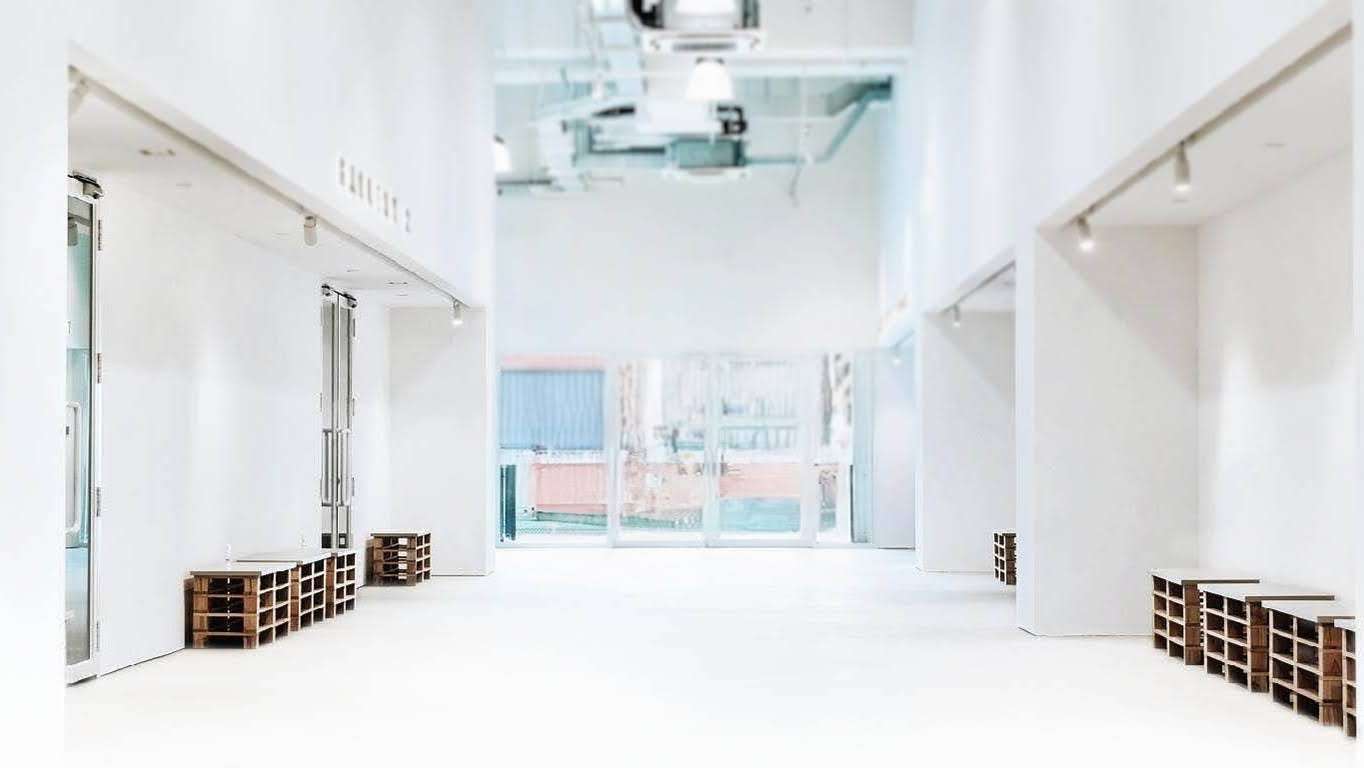
The contrast could not be more jarring. It was a shift from the sublime to the utilitarian, from the sacred to the profane. To enter TPD is to leave behind the refined aroma of old wood and beeswax and inhale the scent of commerce, logistics, and the nearby sea. The cavernous ceilings and the unforgiving concrete floors forcefully insert the “white cube” into the core of an industrial beast.
As someone schooled in classical aesthetics and perhaps with a touch of a neurodiverse spirit, I initially felt disoriented. This was … a warehouse, a place of transient goods, not eternal truths.
However, as I wandered through these vast, echoing chambers, my perspective shifted. A poet must discover beauty in the broken tile as well as the jade vase. An artist must recognize that different papers demand different inks.
Art must live on
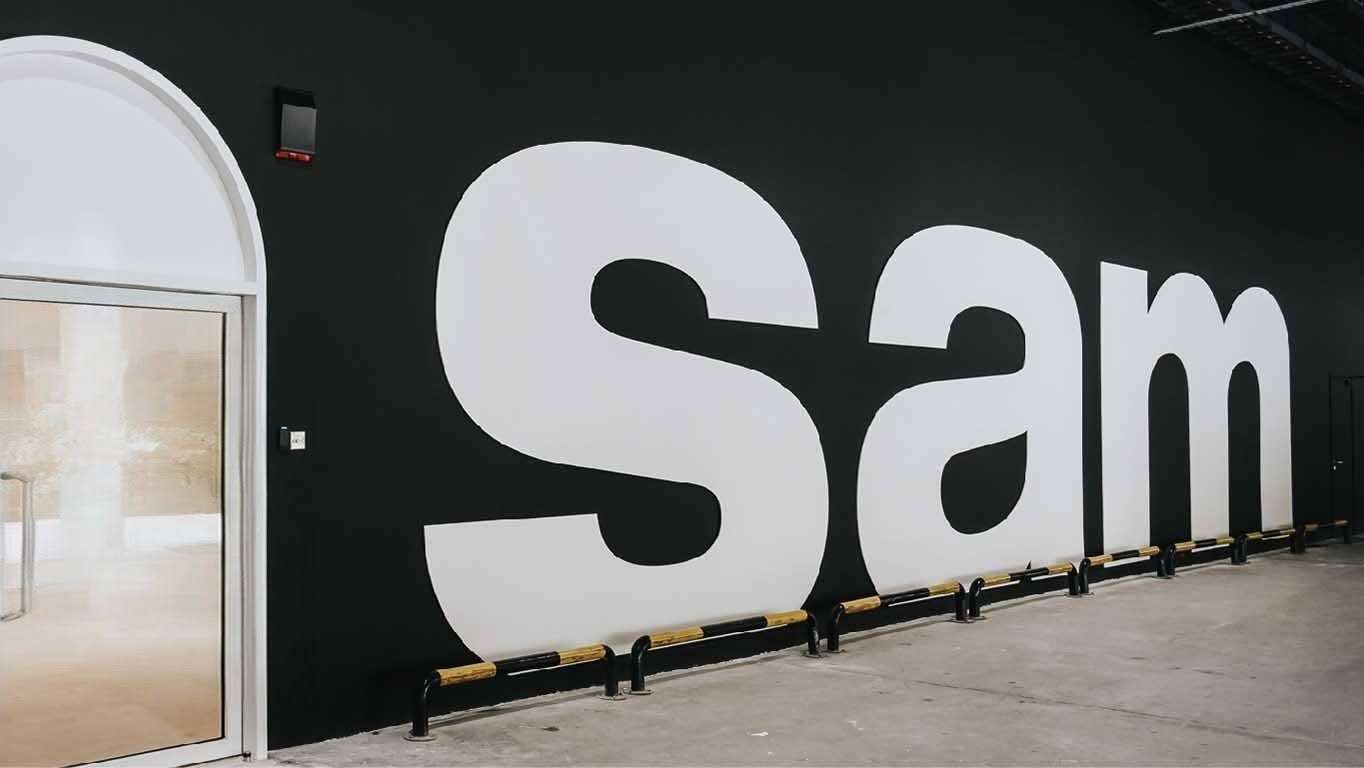
The art currently housed within SAM at TPD has adapted fiercely to its environment. The sheer scale of these warehouse spaces allows for installations that would have choked the delicate corridors of the old SJI building. The art here is louder, rawer, and more immersive. It possesses a different kind of energy—turbulent, challenging, and intensely contemporary, which perhaps does suit the contemporary art it holds.
In these cavernous bays, I see artists grappling with technology, with climate anxiety, and with the noisy data of modern existence. The industrial backdrop does not coddle the work; it interrogates it. The current exhibitions feel less like a curated collection and more like a hurried laboratory of bountiful ideas. It is almost like 行書 or 草書 (cursive Chinese calligraphy script) written with a mop on a factory floor—wild, uncontainable, and demanding. The space forces the viewer to confront the art without the comforting cushion of colonial nostalgia.
But can it?
And now, we face another horizon. The lease at Tanjong Pagar is finite, a mere breath in the life of an institution, likely ending around 2027. This foreknowledge lends a poignant urgency to every visit.
In Chinese philosophy, we understand that all things are transient; the only constant is change itself. The cloud forms, dissolves, and becomes rain. The TPD location is precisely just like a passing cloud or a temporary encampment for the artistic soul of the people.
Why visit now, knowing it may soon vanish? Precisely because it will vanish.
There is a specific aesthetic value in the ephemeral. Like the cherry blossom that is most beautiful just before it falls, this iteration of SAM possesses a unique, fleeting energy. It is a snapshot of Singapore’s art scene operating under duress, finding spectacular bloom in unlikely soil. To visit TPD now is to witness resilience and the Singapore ethos in real time.
Do not wait for the return to the manicured lawns of Bras Basah. Do not wait for the “perfect” gallery. The poet does not wait for the perfect sunset to write; he writes because the sun is setting.
Go to the Distripark. Walk past the shipping containers and the heavy machinery. Enter those vast concrete halls. Witness how art, like water, fills whatever vessel contains it, reflecting the world back to us, however strange the angle. We are rapidly and furiously writing a chapter in our cultural history, which will soon conclude. Before the page turns yet again, we must read it.
Where?
Singapore Art Museum (SAM) currently lives at 39 Keppel Rd, #01-02 Tanjong Pagar Distripark, Singapore 089065, and is open from 1000 to 1900 (last entry at 1830). Visit singaporeartmuseum.sg.
Watch this introductory video to SAM:
###